Embodied carbon
Calculating embodied carbon in temporary works.
We include an Embodied Carbon estimate on every quote we issue. But what exactly is Embodied Carbon, and how do we calculate it?
Keep reading for a summary, or click into our whitepaper below to read the full detail on our methodology (aligned to PAS 2080).
Whitepaper: Calculating embodied carbon in temporary works
This document outlines how we calculate the embodied carbon of our temporary works solutions, providing clear, comparable data to help customers choose lower-carbon options and support more sustainable construction practices.
Read our whitepaper >
Embodied carbon: what it is and why it matters
Embodied Carbon, also known as ‘life cycle embodied carbon’ is the total Green House Gas (GHG) emissions and removals associated with materials and construction processes throughout the whole life cycle of an asset. Unlike operational carbon (which comes from energy use), Embodied Carbon is locked in from the start—meaning it can’t be reduced later.
- 40% of UK carbon emissions are linked to the built environment.*
- 50 million tonnes of CO2 emissions are generated by construction activities annually, over half of which is linked to construction product and materials production.*
- Unlike operational carbon (from energy use), embodied carbon is locked in from the start and cannot be reduced later.
- Measuring embodied carbon is essential to achieving Net Zero.
*source: PROMOTING NET ZERO CARBON AND SUSTAINABILITY IN CONSTRUCTION – gov.uk
- Units: Embodied Carbon is measured in kgCO2e (kilograms of CO2 equivalent)
- Why ‘equivalent’? It includes all greenhouse gases (not just CO2), adjusted for their global warming potential over 100 years.
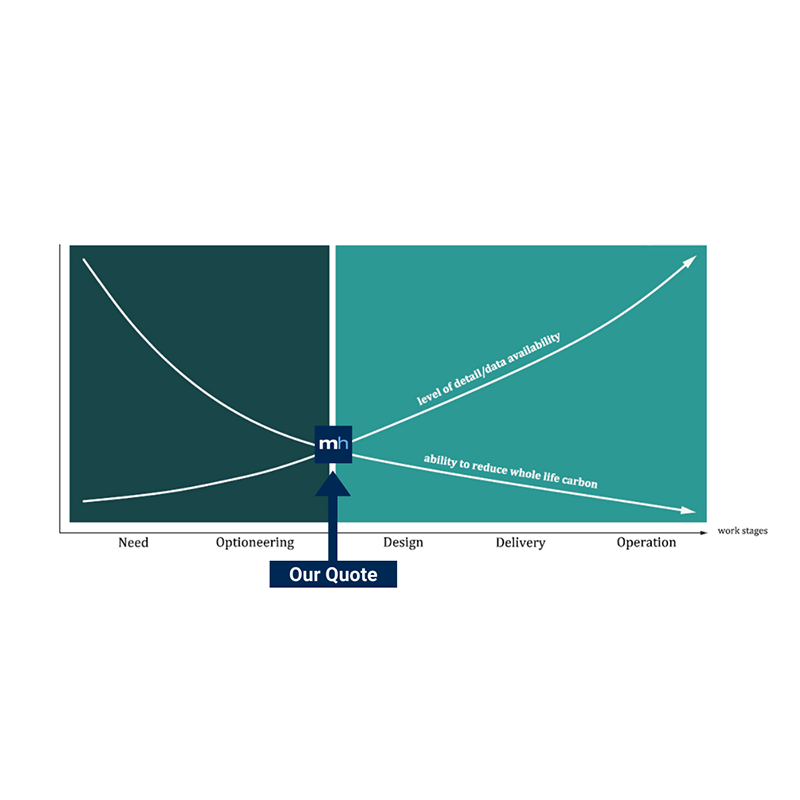
The earlier the better!
- At the start of a project, data accuracy is low, but there’s more opportunity to reduce carbon.
- As the project progresses, more data is available—but fewer options remain to cut carbon.
- The sweet spot for action? As the below image from PAS 2080 shows, during optioneering and design – that’s why we show embodied carbon on all our quotes.
Mabey Hire and the waste hierarchy
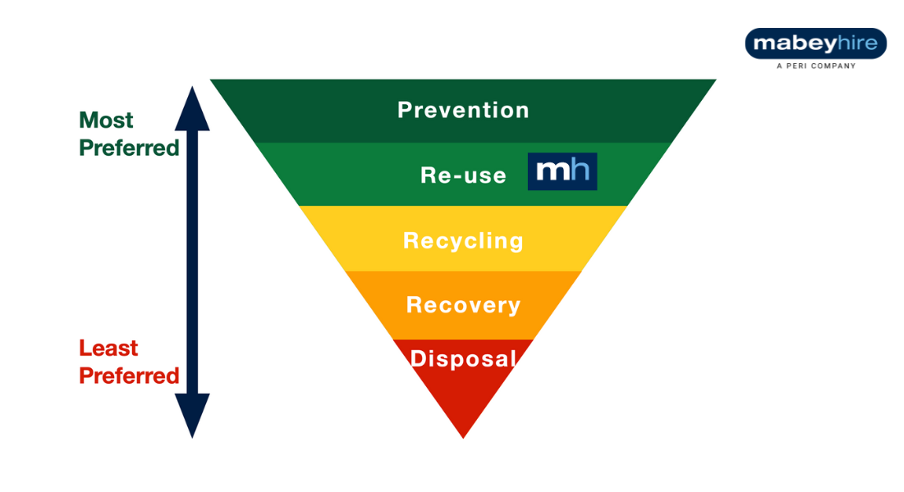
Reusing beats recycling! We reuse the same equipment over and over – placing us at the top of the waste hierarchy.
The only option in the waste hierarchy better than re-using equipment is Prevention – to not do anything at all. However, in most cases for temporary works, that wouldn’t be a good option either. Often it would mean more permanent works (so more carbon overall) or less efficient works on site (eg for an excavation this would mean more benching, more plant, more excavated soil, etc)
How we calculate embodied carbon in temporary works
We’ve calculated the embodied carbon of over 3,000 of our products (using industry best practices, aligned with PAS 2080). We’ve assessed the duration that each product will spend on hire during their lifetime. That enables us to calculate an estimate of embodied carbon per week on hire for each item, which we can apply to your project.
In our quotes, you’ll see that the embodied carbon estimate is built up from three main aspects:
1. Product Embodied Carbon
Per week on hire for HIRE products and total for SALE products.
2. Transport Carbon
Embedded emissions + operational emissions per delivery.
3. Installation Carbon
Based on the activity of our installation team if they’re working on your project.
Helping you build sustainably
By providing transparent embodied carbon data on very quote, we empower our customers and the rest of the supply chain to:
- Make informed, sustainble decision
- Reduce the project’s carbon footprint
- Align with industry standards such as PAS 2080
Sustainability isn’t just about compliance – it’s about smarter construction.